


Optilogic - AI Supply Chain Design Software

.svg)
.svg)

Getting started
A partner for smarter production
Optilogic builds powerful automation and data-analysis software for complex industrial environments — helping manufacturers collect, visualize, and act on production data with clarity and precision.
Our collaboration with Optilogic focused on transforming their digital platform into a user-centered experience that supports operators, engineers, and decision makers in making better data-informed decisions quickly and confidently.
Context
A platform with deep technical roots
Optilogic’s software is engineered to handle complex automation workflows, run data loggers like DataMagnet, and deliver extensive reporting and system intelligence.
Industrial applications are by nature data-heavy and demanding — users need to process large sets of operational information without cognitive overload, translate metrics into actions, and ensure reliability in high-stakes environments. Our challenge was to design an intuitive user interface that bridges technical complexity with human understanding.
The Challenge
Balancing power with clarity
Across thousands of screens and workflows, key goals emerged:
- Make data accessible and actionable
Industrial data can be overwhelming — users should be able to parse insights at a glance and take informed actions without frustration. - Design for diverse roles and contexts
Users ranged from on-floor technicians to engineering leads — each needing context-appropriate tools and views. - Create a scalable, coherent design language
A unified UI and style foundation would support future product growth without duplicating design effort.
My role
Elevating UI for industrial performance
At Moin Studio, we partnered closely with Optilogic’s product leadership to:
- Conduct user research and establish core personas and journeys
- Redefine information hierarchy for dashboards and analytics
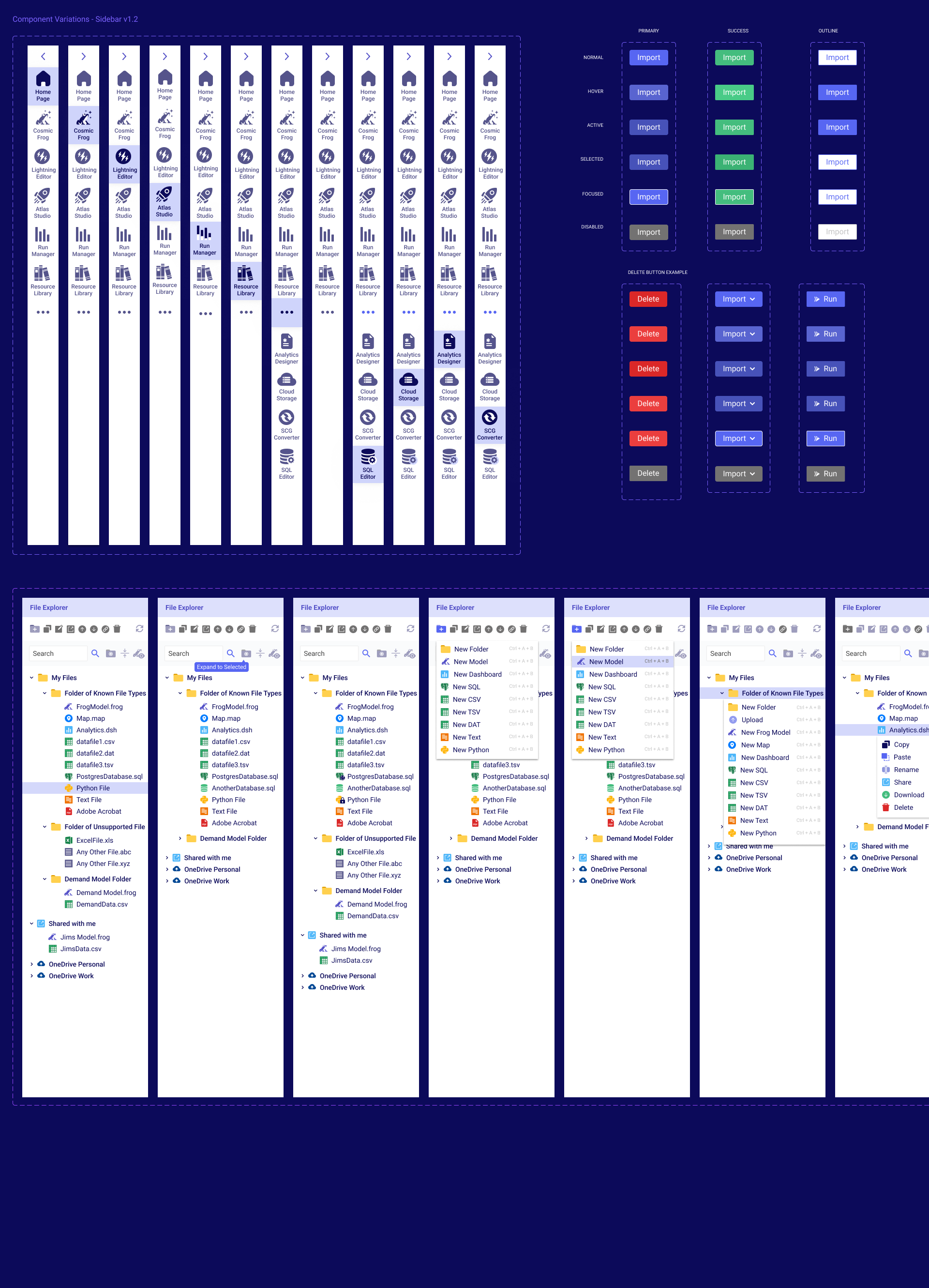
- Build UI components and an extensible product style guide
- Deliver high-fidelity prototypes, screen flows, and design system documentation
We worked iteratively — validating assumptions with stakeholders, refining designs through feedback loops, and aligning UI decisions with development constraints.
User insights
Understanding how people work
To inform design decisions, we mapped how different users interact with industrial data:
- Operators needed straightforward dashboards that reduced training friction
- Engineers required drill-down panels for diagnostics
- Managers valued clear high-level reports showing performance over time
This informed our prioritization — surface the most relevant insights upfront while supporting deeper exploration where needed.
The solution
A scalable, intuitive production platform
We redesigned Optilogic’s interface with a focus on:
Clear dashboards
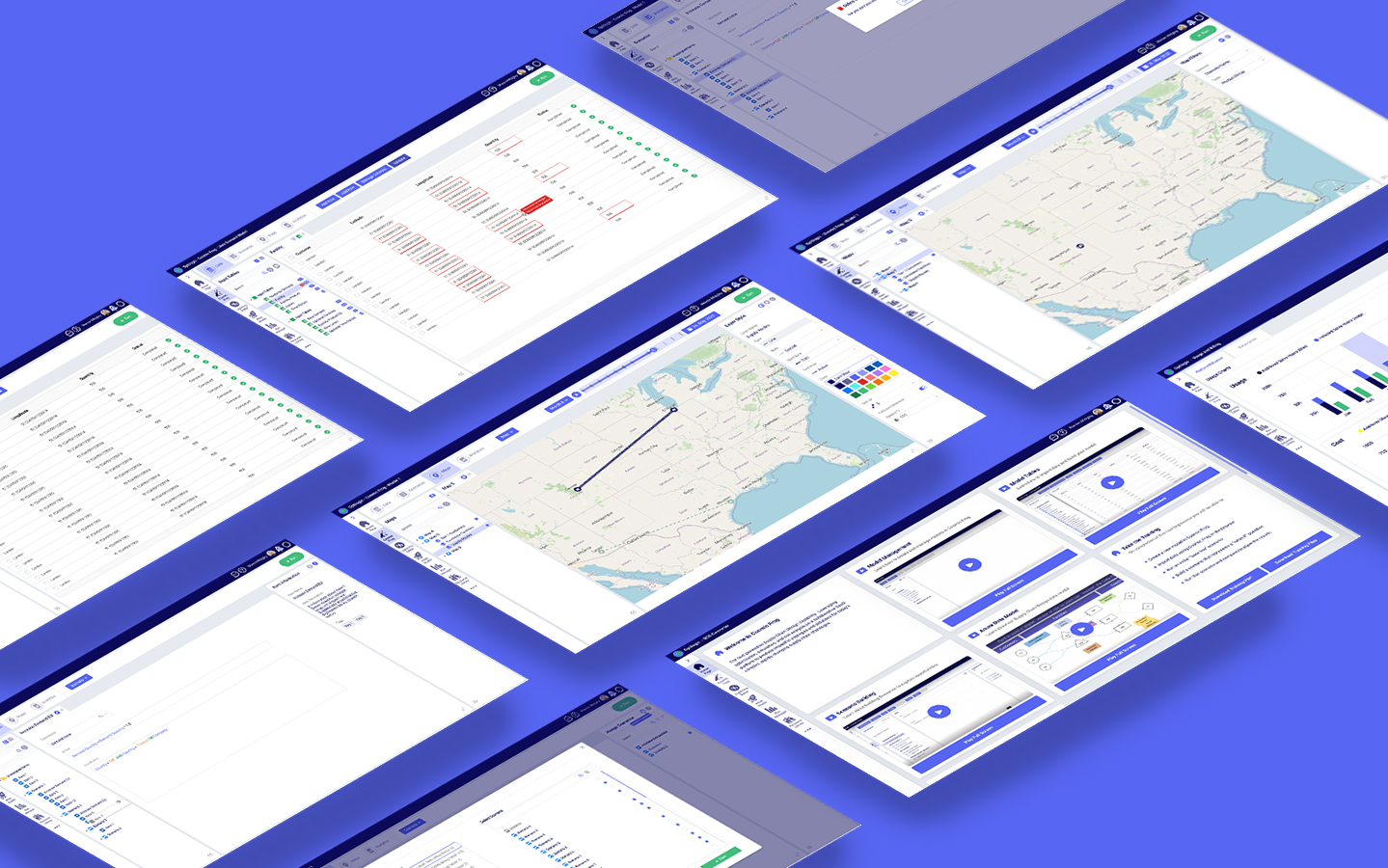
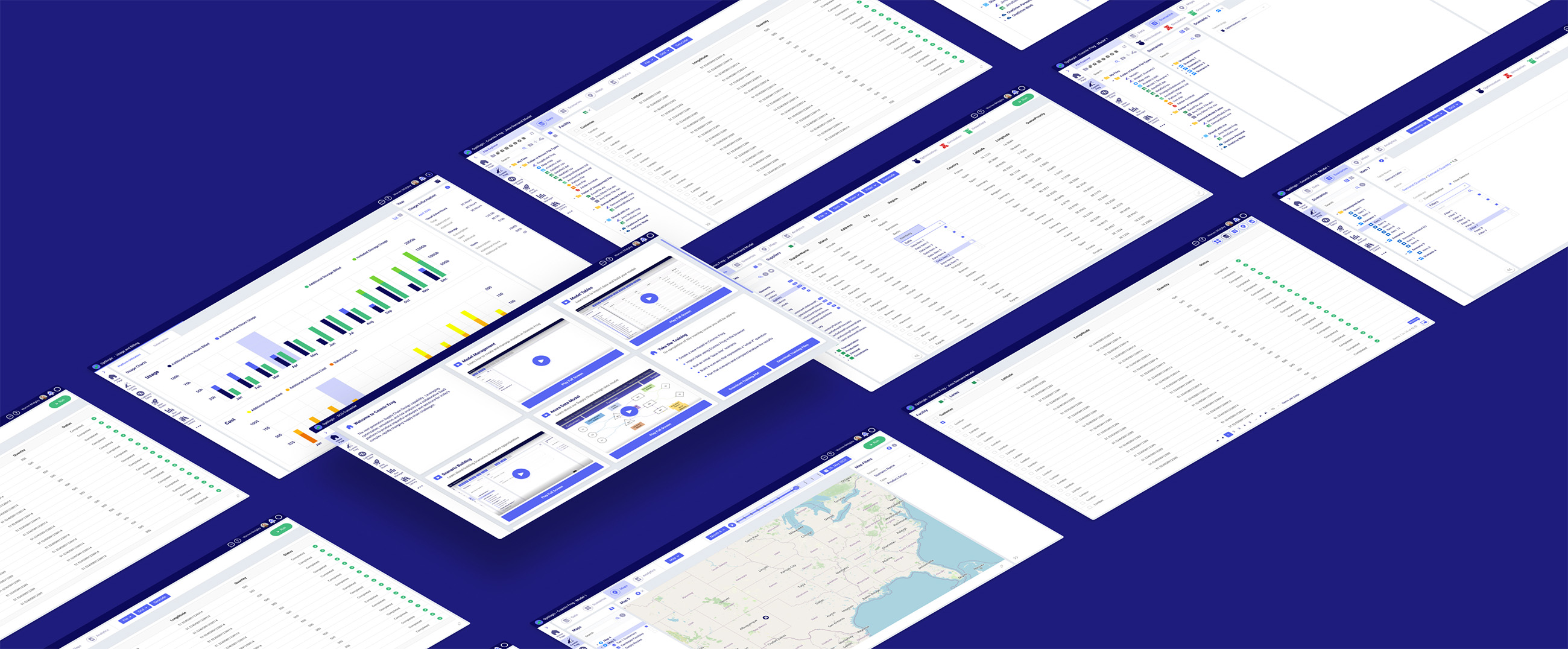
We organized the layout to display key production metrics at a glance — helping users quickly see system status without noise.
Modular UI components
A reusable design system of charts, panels, and controls ensured consistency across modules and workflows.
Context-aware data exploration
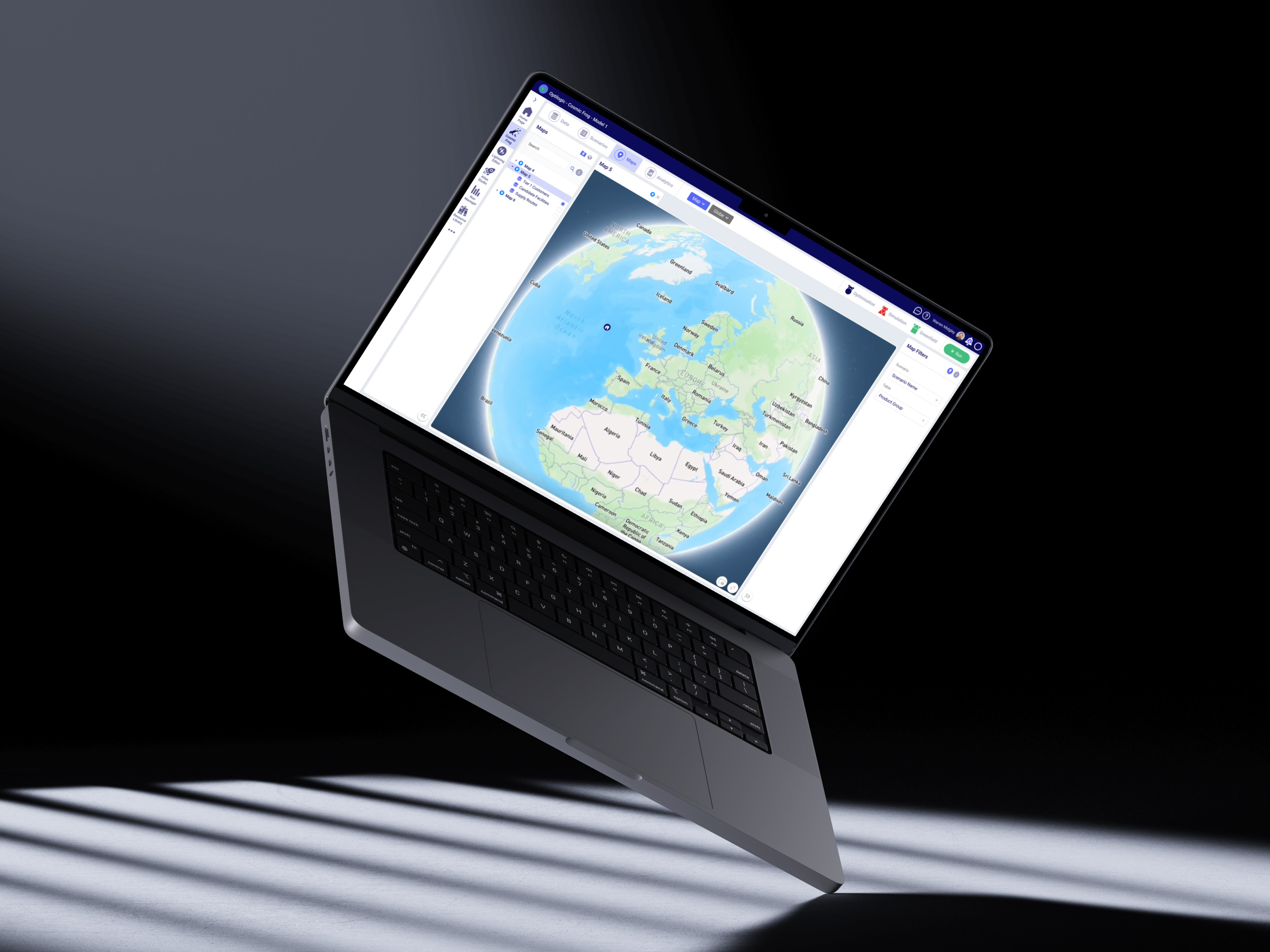
Interactive filters and drill-down features let users navigate from general overview to detailed insights with confidence.
Visual clarity and hierarchy
Information was structured to reduce cognitive load — visual weights, typographic clarity, and spacing were calibrated for industrial environments where quick comprehension matters.
Impact
More confident decisions, faster outcomes
Our work helped Optilogic deliver an experience where:
- Users find relevant production insights faster
- Complex data becomes more digestible across roles
- The platform scales with evolving business needs — without losing coherence
Learnings
Designing for context matters
Industrial software must balance rigor and usability. Simplification isn’t about hiding complexity — it’s about presenting the right detail at the right time.
Collaborative design accelerates impact
Iterating with Optilogic’s internal teams ensured each interface decision was grounded in real user needs and technical feasibility — building trust and accelerating delivery.
Shout-outs
Huge thanks to the product, engineering, and leadership teams at Optilogic for their collaboration, feedback, and deep domain expertise throughout this project.


.png)


