


Katalyo - Digital Platform

.svg)
.svg)

Getting started
Empowering builders without code
Katalyo is a next-generation, no-code platform that enables organizations and creators to automate processes and build digital products without writing a line of code — lowering barriers to innovation and accelerating digital transformation.
When Katalyo partnered with Moin Studio, the goal was to refine the product experience, ensure clarity across workflows, and build a design system that supports rapid growth and complexity — both for internal teams and end users.
Context
Complex platform, growing user needs
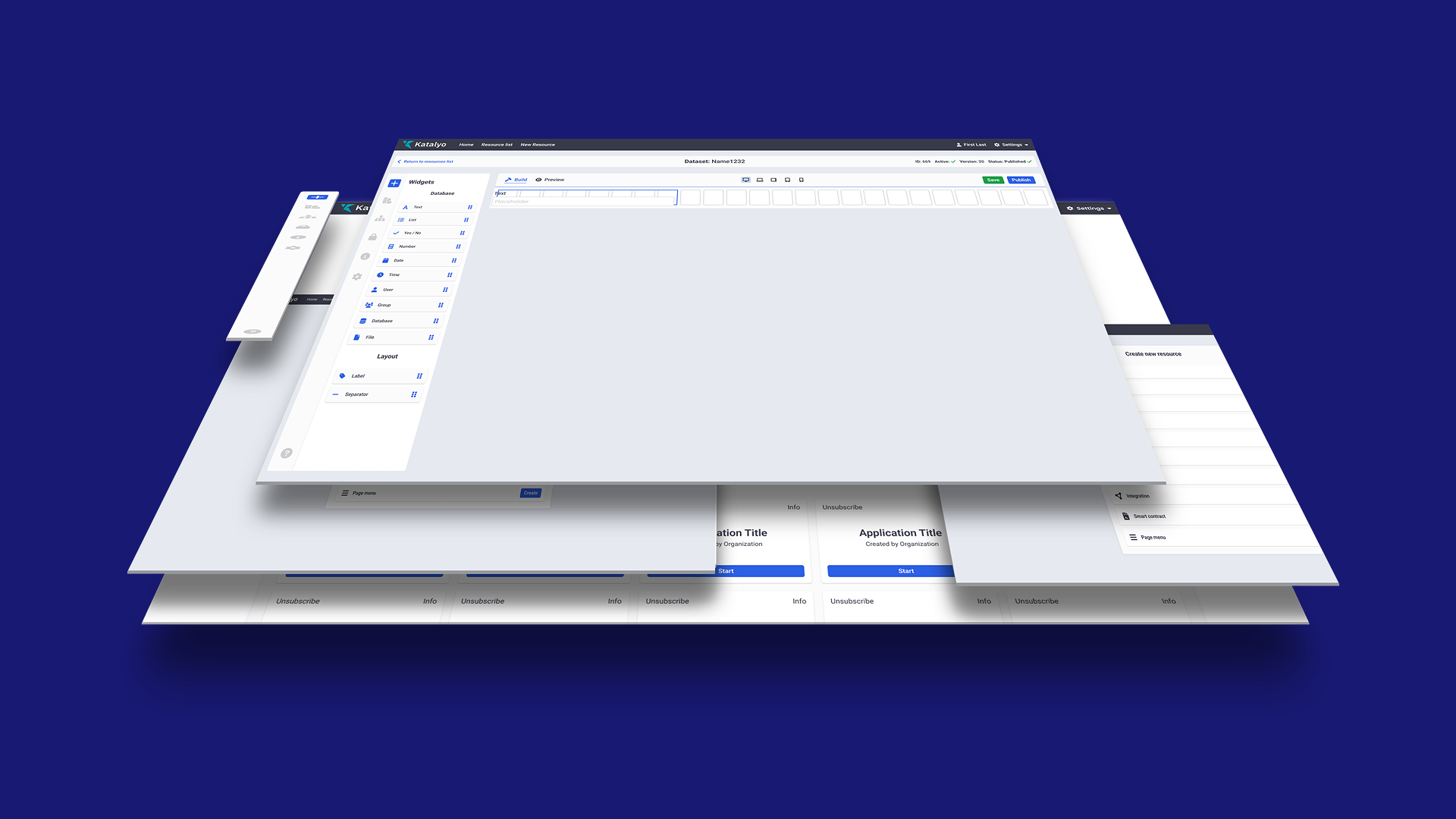
The Katalyo platform provides a rich set of tools for workflow automation, data modeling, integration, and rapid application assembly — all through visual UI and no code.
However, early user feedback and analytics showed friction points: inconsistent flows, unclear interaction states, and UI patterns that lacked cohesion. These issues made learning and using the platform harder than it needed to be — especially for first-time builders.
The challenge
Turning flexibility into clarity
The project centered on three core challenges:
- Unifying fragmented user flows
Users faced inconsistent paths through key tasks — from building workflows to managing resources — creating confusion and inefficiency. - Designing a scalable UX
The breadth of platform features required a flexible UI system that could grow without breaking consistency. - Creating a reusable design system
Katalyo needed a foundation of components, patterns, and standards that could accelerate new feature development and ensure cross-team alignment.
My role
UX leadership, design system architecture, and interface refinement
At Moin Studio, we partnered closely with Katalyo’s product and engineering teams to:
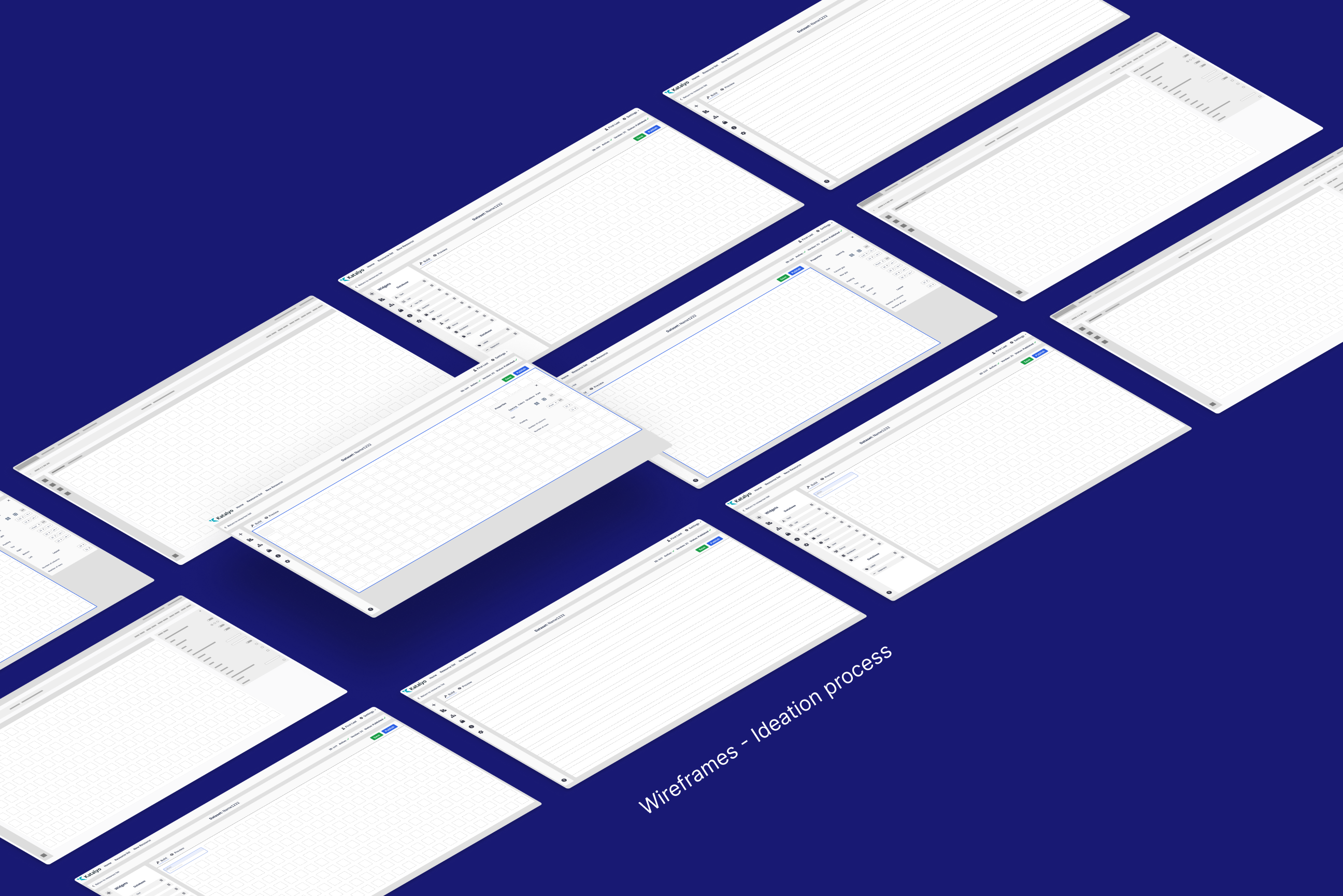
- Audit and restructure core workflows
- Map and optimize interaction flows for key user tasks
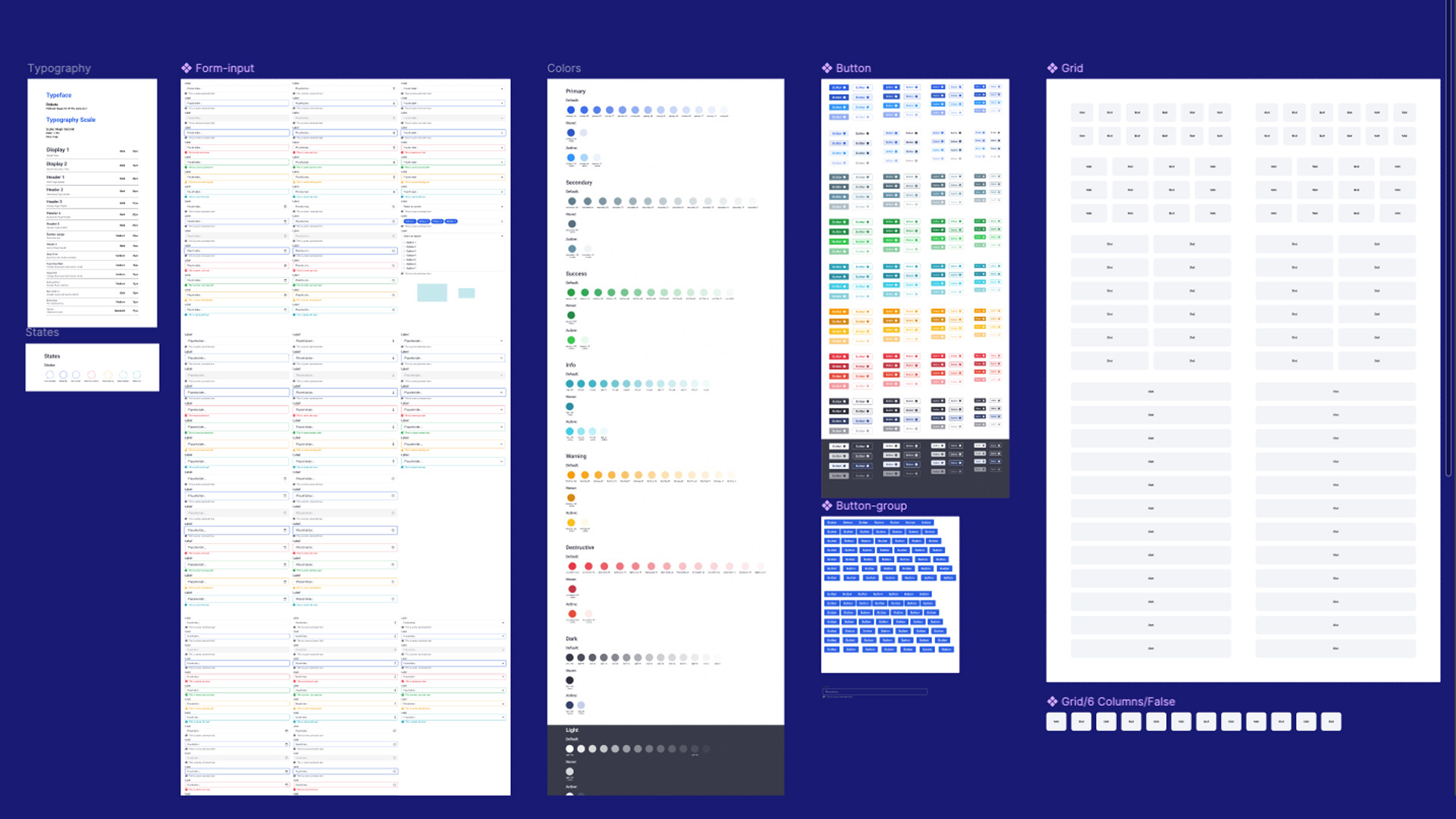
- Develop a comprehensive design system with reusable components
- Define UI guidelines, interaction patterns, and accessibility standards
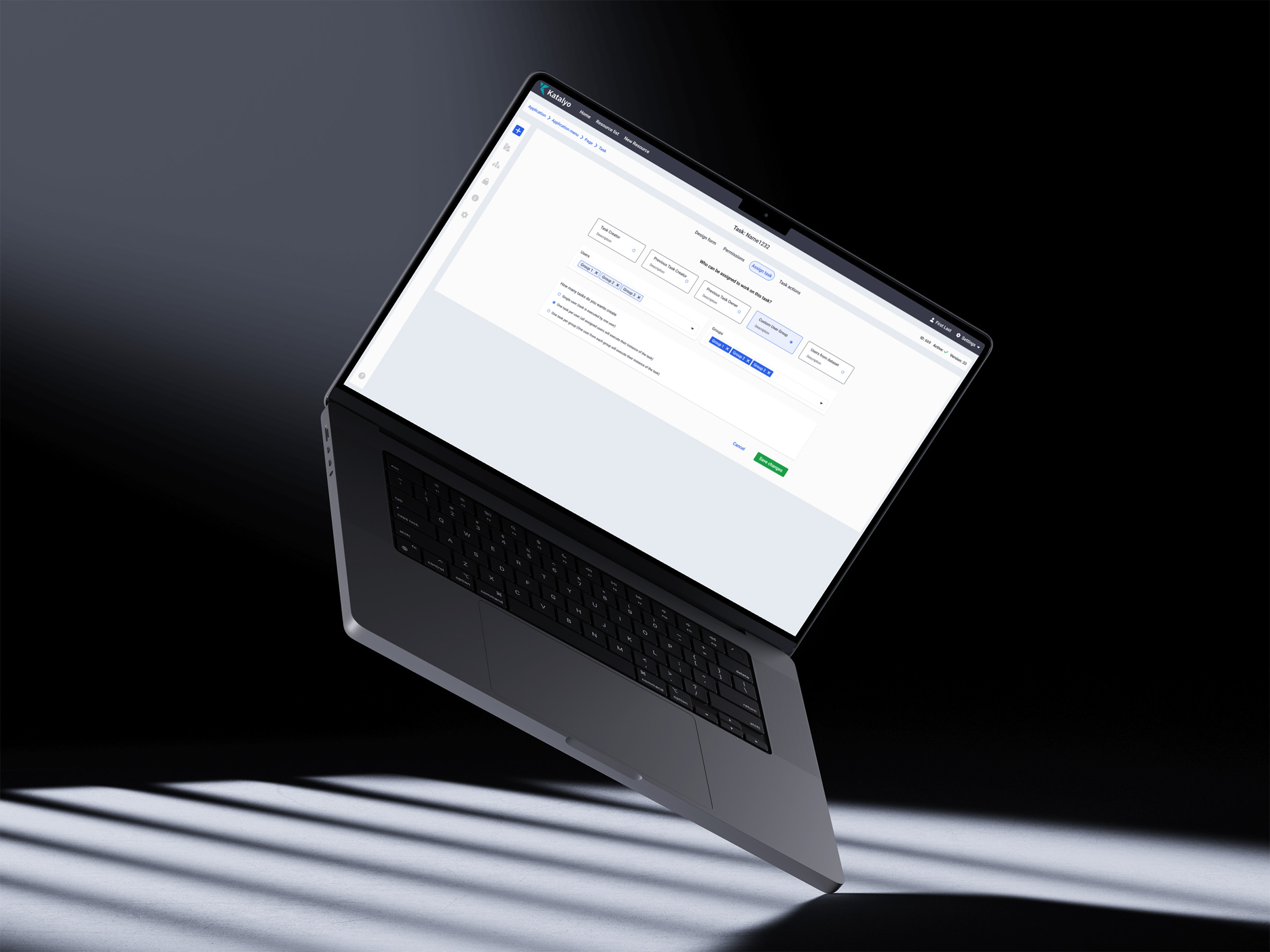
- Deliver high-fidelity designs ready for implementation
The process was iterative and collaborative, incorporating stakeholder insights and user feedback at every stage.
The solution
A polished UX with clarity and cohesion
Streamlined user flows
We mapped out the most important workflows for creation, deployment, and management — removing dead ends and redundant steps. The result was clean, predictable paths with clear entry points and exit states.
Flexible design system
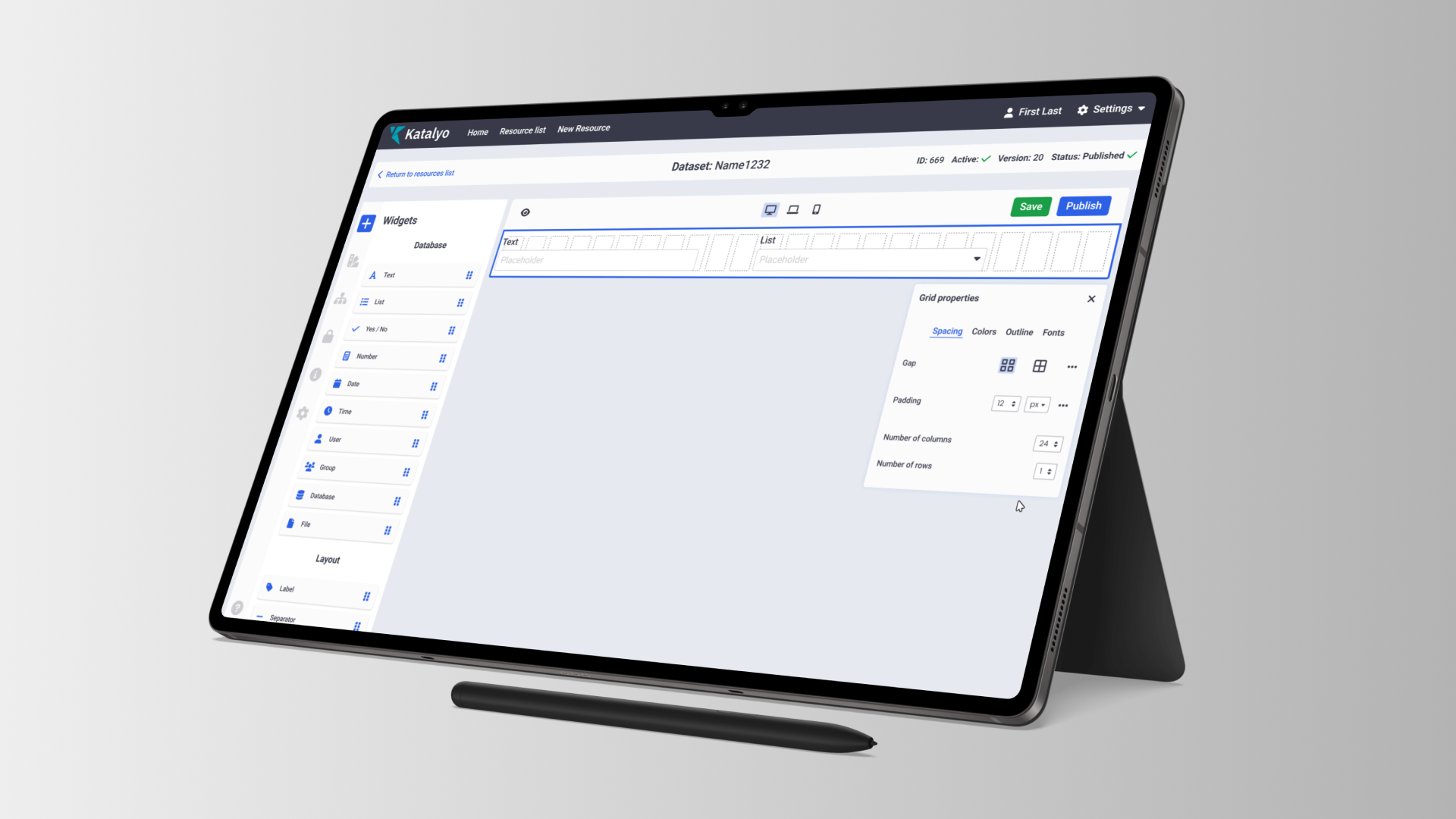
We built a scalable design system of modular components:
- Standardized UI elements (buttons, inputs, modals, toasts)
- Layout patterns and grids tailored for web applications
- Color, typography, and spacing tokens for consistency
- Interaction states and accessibility considerations
This system made it easier to maintain quality as the platform evolves.
UX and visual clarity
The interface was refined to give users:
- Better visual hierarchy
- Clearer feedback for actions and errors
- Consistent navigation patterns
- Faster recognition of interface elements
The outcome supports both seasoned builders and new adopters in working more confidently.
Listening to users and product stakeholders
We conducted targeted interviews with both internal teams and end users to understand:
- Where users got stuck or confused
- Which tasks were most critical and frequent
- What expectations users had around speed, clarity, and feedback
- How power users and new users differed in needs
This research revealed that while the platform’s capabilities were powerful, users needed more predictable flow structures and visual cues to feel confident and productive.
Impact
Better outcomes for builders and teams
Our collaboration helped Katalyo achieve:
- More intuitive and cohesive user experiences
- Reduced cognitive load across complex tasks
- A scalable design system that accelerates feature delivery
- Clearer visual language and interaction standards
By focusing on clarity and structure, we helped turn complexity into capability — empowering users to build and innovate faster.
Learnings
Structure unlocks creativity
Especially in no-code platforms, users expect freedom — but they also depend on guidance and consistency to explore that freedom without frustration.
Design systems boost long-term velocity
Investing in a reusable design foundation doesn’t just improve UI quality — it enables teams to iterate faster and with confidence.
Shout-outs
Thanks to the Katalyo team for their openness, expertise, and collaborative spirit throughout the design and iteration process. Their insights were instrumental in shaping a stronger, more user-centered product experience.


.png)


